Blog #0197: The Expanding Pie (and the Cleanup Bill)
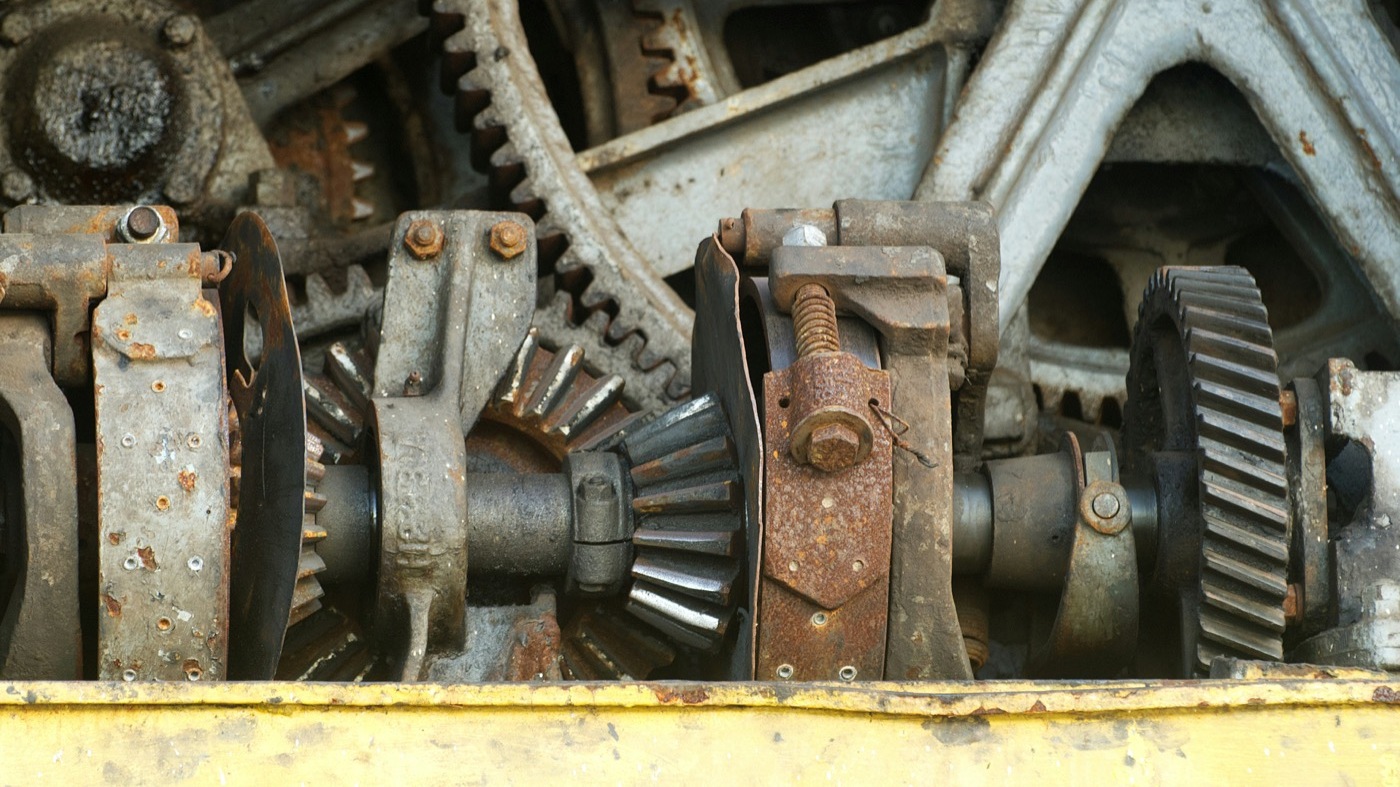 Source: Photo by Stephan Hinni on Unsplash
 [ED: Video didn't kill the radio star, but the buggy whip company didn't survive the automobile. The expanding-pie narrative and its discontents — and why the speed of this transition might change the calculus. 1/5 hats.]
Video Killed the Radio Star
Except it didn't. The Buggles released the track in 1979. MTV made it their first-ever broadcast in 1981. And radio is still here. Video didn't kill radio. It refocused radio's attention, gave it competition for audience attention, and forced it to figure out what it was actually good at. Radio adapted. Radio survived.
This is the story people tell when a new technology arrives and someone starts shouting about the death of something. Software engineers are dead. Writers are dead. Artists are dead. The counterargument is always the same: the pie gets bigger, new capabilities unlock new possibilities, and the thing you thought was dying just transforms.
The pattern is real. It does happen. But it's not the whole story.
The Thin Wedge
When a new capability arrives, it enters the pie of what's possible as a thin wedge. Then it expands — sometimes growing the pie, sometimes making it gigantic.
Electronic music is the cleanest example I know. It didn't kill music. It unlocked an entirely new option set for a different type of person — someone who would never have been a master guitarist, who might never have picked up a traditional instrument at all, but who can now stand in front of hundreds of thousands of people making extraordinary music. The abstraction layer — synthesisers, drum machines, sequencers, DAWs — created space for creative expression that didn't exist before.
AI is doing the same thing now. People who couldn't code can build prototypes. People who couldn't draw can generate visual concepts. People who couldn't write can get a first draft that they then shape into something real. The wedge is in. And it's expanding.
This part of the story is true. And it's the part that optimists and technologists (myself included) like to tell. But there's another part.
The Buggy Whip Problem
Radio survived the television. But the New York Buggy Whip Company did not survive the automobile. Blacksmiths did not survive the industrial revolution in anything like their previous form. Hand weavers did not survive the power loom. Switchboard operators did not survive the automated exchange.
"Video Killed the Radio Star" is a survivorship bias anthem. We tell the story of radio because radio made it. We don't tell the story of the industries that didn't — or rather, we tell those stories differently. We call them "creative destruction" and put them in economics textbooks, where they read like natural history rather than something that happened to actual people with actual families in actual towns.
The industrial revolution created extraordinary wealth and extraordinary suffering. It destroyed entire trades and entire communities. The textile workers of northern England didn't experience "the expanding pie." They experienced unemployment, poverty, and social upheaval. The people who benefited from the new industrial economy were rarely the same people who bore the costs of the transition. The pie got bigger. The distribution of pie was — and remains — a political and social question, not a technological one.
What's Different This Time?
Maybe nothing. Maybe the pattern holds exactly: some things die, new things are born, the net is positive in aggregate, and the transition is painful for the people caught in it. That's been the story of every major technological shift for three hundred years.
Or maybe the speed is different. Previous industrial transitions played out over decades. The shift from agrarian to industrial economies took a century or more. Even the digital revolution — mainframes to PCs to internet to mobile — unfolded over fifty years. Communities had time (barely) to adapt. Retraining programmes could (in theory) catch up. Social safety nets could (inadequately, but still) be extended.
AI-driven displacement may move faster. The gap between "this job exists" and "this job is handled by a model" could compress from decades to years, or from years to months. That speed difference matters. A transition that takes thirty years and one that takes three produce very different human outcomes, even if the endpoint looks identical from a sufficient distance.
This is not an argument against AI. It's an argument against the complacent version of the expanding-pie narrative — the one that says "the pie gets bigger, so everyone will be fine." Everyone will not automatically be fine. The pie getting bigger is a necessary condition for broad prosperity; it is not a sufficient one.
Two Legitimate Questions
The question "What will AI unlock?" is the right question for optimists, entrepreneurs, and builders. It's the question that drives investment, creativity, and the genuinely exciting expansion of what's possible. It's the question I spend most of my time on, and I find it energising.
The question "What will AI destroy, and who pays for the cleanup?" is the right question for policymakers, citizens, and anyone who remembers that economies are made of people. It's the question that drives social policy, retraining programmes, safety nets, and the unglamorous work of making transitions survivable for the people who didn't choose to be in the middle of one.
Both questions are legitimate. Neither cancels the other out. And anyone who only asks one of them is telling half a story.
The Hard Work
Stop mourning what's being replaced. And stop pretending nothing is being lost. Both reflexes are lazy.
The first tells a story of pure decline that ignores the real, measurable expansion of creative and productive capability that new tools deliver. The second tells a story of pure progress that ignores the real, measurable cost to people whose skills, livelihoods, and communities sit in the path of the transition.
The hard work is building the new while honestly accounting for the cost. That's not a comfortable position. It doesn't make for a clean narrative. But it's the honest one.
Regards,
M@
Originally posted on matthewsinclair.com and cross-posted on Medium.
[ED: If you'd like to sign up for this content as an email, click here to join the mailing list.]